Ball Valve vs Butterfly Valve: Which One Belongs on Your Line?
Both valves shut off flow, but they behave very differently under pressure, cost and space constraints. Here is how to pick between them without over- or under-specifying.
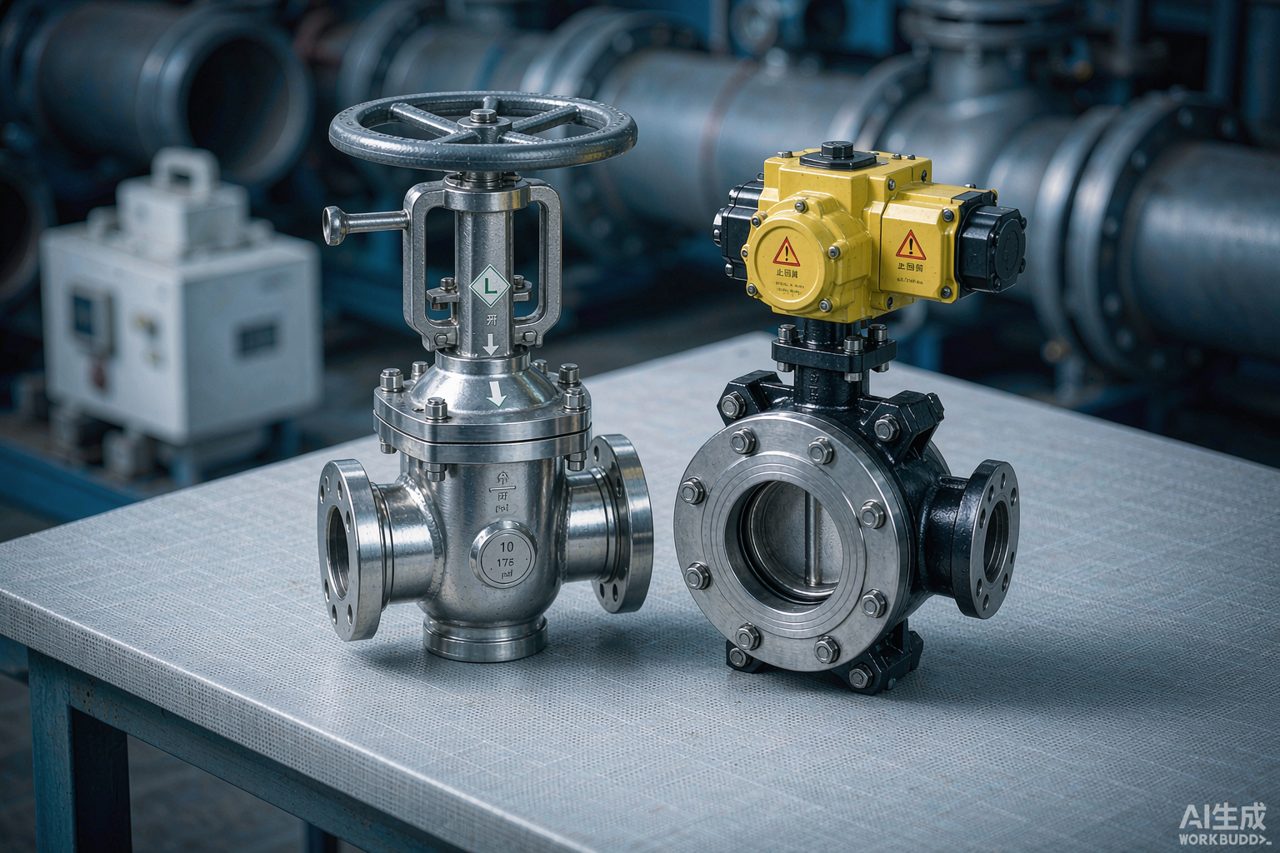
Ball valves and butterfly valves both isolate a line, and on a piping diagram they look interchangeable. In practice they occupy different niches, and swapping one for the other usually shows up as a cost problem, a weight problem or a sealing problem within the first year.
Sealing behavior
A ball valve seals on a machined seat that wraps most of the ball surface, so it achieves a tight bubble-tight shutoff even after thousands of cycles. A butterfly valve seals on a narrow elastomer or metal seat around the disc edge. That seat is exposed to flow every time the valve modulates, which is why butterfly valves in dirty or abrasive service tend to develop leak paths first.
If your process requires zero leakage - fuel loading arms, chlorine headers, reactor feed lines - the ball valve is the safer default. For cooling water, fire mains and other services where slight weeping is tolerable, a resilient-seated butterfly valve does the same job at a fraction of the cost.
Pressure and size ranges
- Ball valves are practical from DN8 up to roughly DN400 in standard forged or cast bodies, and they hold full line pressure rating across that range.
- Butterfly valves scale economically from DN50 to DN3000 and beyond, which is why almost every large-diameter water line uses them.
- Above PN40, high-performance butterfly valves remain available, but double-block-and-bleed requirements usually push you back to ball or gate designs.
Weight, space and cost
A DN300 butterfly valve weighs a quarter of an equivalent ball valve and fits in a short face-to-face length. On skids, shipboard systems and retrofits inside congested racks, that difference decides the layout. On small-diameter instrumentation lines, the cost gap is negligible, so most engineers simply spec ball valves everywhere below DN50.
Flow and throttling
Neither valve is a control valve, but butterfly valves modulate more gracefully. The disc profile gives a more predictable flow characteristic between 20 and 70 degrees of travel, which is why they appear on pump discharge headers where occasional balancing is needed. Ball valves are effectively open-or-shut devices; partial opening with a full-bore ball erodes the seat quickly.
A practical selection rule
Below DN50, spec ball valves for everything - the price difference disappears. Between DN50 and DN300, compare seat material life against media cleanliness. Above DN300, butterfly valves usually win unless tight shutoff or pigging requirements say otherwise. When in doubt, buy the valve whose spare seat you can actually source locally.