Nickel Aluminum Bronze for Seawater Valves
A materials guide to nickel aluminum bronze for seawater valve duty — how the kappa-phase microstructure and self-healing surface film work, where NAB beats bronze, 316 and duplex, and what to check in castings, weld repairs and maintenance.
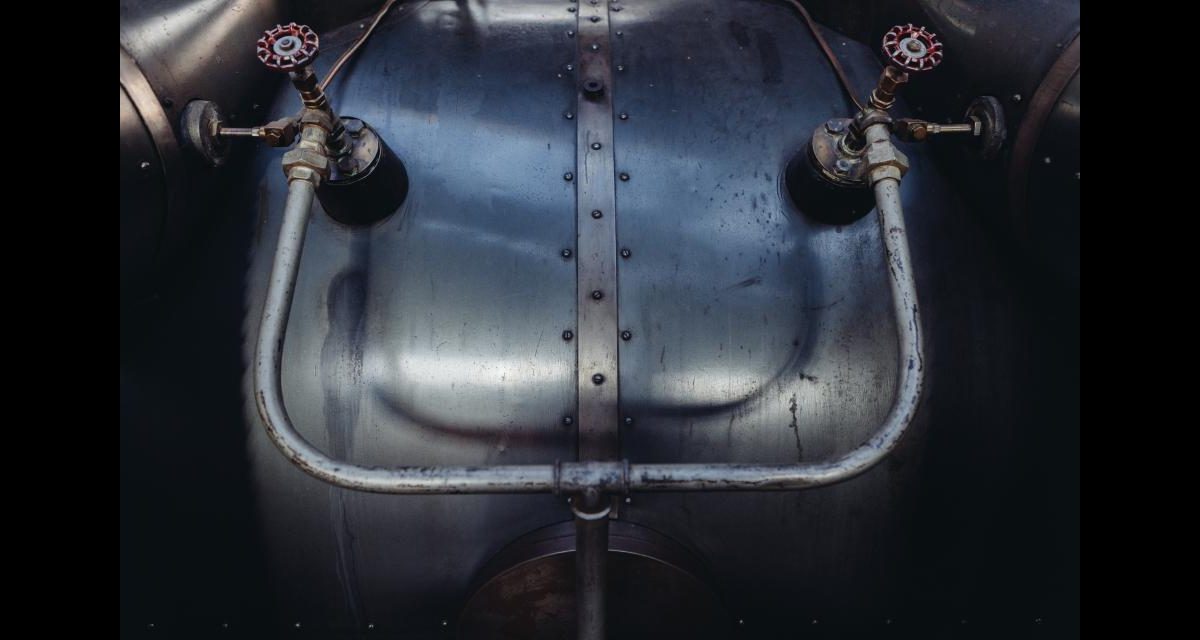
The Alloy Behind the Reputation
Nickel aluminum bronze — NAB in the shorthand every shipyard and offshore engineer uses — is the workhorse copper alloy for seawater valves, pump casings and propellers. The dominant cast grade, UNS C95800, contains roughly 9% aluminum, 5% nickel, 4–5% iron and the balance copper. Wrought equivalents like C63200 serve forged and bar components. The value of the recipe lies in what heat treatment and solidification produce: a dual-phase structure of alpha copper matrix strengthened by a family of kappa phases — iron-rich particles, lamellar eutectoid colonies and nickel-aluminum precipitates — that together deliver strength approaching some stainless steels while retaining copper-alloy corrosion behavior.
That combination is unusual. Most corrosion-resistant metals for seawater are passive-film formers whose protection depends on keeping oxide chemistry intact. NAB protects itself differently, and the difference shapes everything about how it performs, fails and should be specified.
The Self-Healing Film and Erosion Resistance
In aerated seawater, NAB develops a complex surface film — an outer layer of cuprous oxide enriched with aluminum oxide beneath, plus incorporated chlorides over time — that adheres tightly and reforms rapidly when disturbed. Unlike the ten-year formation of patina on unprotected copper alloys, NAB's film reaches protective maturity within weeks and heals mechanical damage almost immediately.
The practical consequence is outstanding resistance to flow-assisted corrosion. Where tin bronze and copper-nickel alloys impose velocity limits to avoid washing away their protective layers, NAB tolerates pump-suction and discharge velocities that would strip lesser alloys, which is precisely why seawater pump manufacturers build impellers and casings from it. Sand-laden seawater, the scourge of cooling systems in shallow coastal intakes, combines erosion with corrosion in a way that defeats either mechanism alone — and NAB handles the combination better than almost any alternative at its price point.
Cavitation resistance follows from the same microstructure. The kappa-phase-strengthened matrix resists the micro-jet impact of collapsing vapor bubbles, making NAB the default material for pump-adjacent valves — suction and discharge isolating valves, foot valves — where pressure fluctuations and turbulence are unavoidable.
Dealuminification: The Known Weakness
NAB's principal corrosion failure mode is dealuminification — selective removal of aluminum from the aluminum-rich kappa phases, leaving a porous, copper-rich residue with almost no strength. It is creepingly insidious rather than dramatic, and it appears under recognizable conditions:
- Hot seawater above roughly 40–50°C in stagnant or creviced zones, where the protective film degrades locally.
- Improper heat treatment or slow cooling of heavy castings, which produces coarse, continuous eutectoid alpha-plus-kappa colonies susceptible to selective attack. A well-executed heat treatment breaks up this connectivity and is one of the strongest predictors of long-term performance.
- Tight crevices and under-deposit zones in polluted harbor water with sulfides, where the film cannot maintain itself.
The metallurgical control point is casting quality. Specifications for NAB valve bodies should demand heat treatment to a qualified cycle, sound radiography or ultrasonic inspection of critical sections, and verification of the microstructure where service is severe. A poorly processed C95800 casting and a properly processed one carry the same designation and wildly different service lives.
How NAB Compares in Seawater
- Against tin bronze and gunmetal (C90500-class alloys): NAB offers roughly double the strength, far better erosion and cavitation resistance, and superior film stability at elevated temperature. Gunmetal remains fine for low-velocity, ambient-temperature systems, which is why it persists in plumbing-class marine hardware.
- Against 316/316L stainless: 316 pit-corrodes and crevice-corrodes in stagnant seawater, particularly above ambient temperature, and its failures are punctual and unpredictable. NAB's attack, when it occurs, is shallow and visible — a kinder failure mode for maintained systems. In flowing, aerated seawater at moderate temperature, NAB is generally the more reliable choice at similar or lower cost.
- Against duplex 2205: duplex wins on strength and handles warmer, more aggressive water than NAB, but it carries a genuine crevice-corrosion risk in hot stagnant zones and a higher price. It also sits far from copper alloys on the galvanic series.
- Against super duplex and super austenitics: the premium alloys take over where temperature, chlorination level or mechanical demands exceed NAB's envelope — typically hot, heavily chlorinated water or high-pressure systems where strength dominates.
Galvanic Behavior and Biofouling — Quiet Advantages
Two system-level properties of NAB rarely appear on datasheets but matter enormously in real plants.
First, galvanic position. NAB sits in the middle of the galvanic series — more noble than carbon steel and aluminum, less noble than stainless steels, titanium and nickel alloys. In a mixed-material seawater system, NAB valves neither drive severe corrosion of adjacent carbon-steel components the way titanium or super duplex do, nor corrode sacrificially the way aluminum bronze without nickel can. When a system mixes copper-nickel piping with NAB valves, the two metals are nearly compatible — a pairing that avoids the surprises of stainless-into-copper-nickel systems.
Second, biofouling. Copper ions leaching at the film surface discourage marine growth, so NAB valves and pump components stay cleaner in static service than stainless or titanium equivalents, which foul readily. For firewater systems that sit dormant until the day they are needed, reduced fouling at valves and strainers is a genuine reliability advantage, not a cosmetic one.
Castings, Weld Repairs and Maintenance
Most NAB valve bodies are sand castings, and the quality conversation is worth having explicitly:
- Foundry process control — melt practice, degassing and pouring temperature determine porosity and oxide inclusion levels; radiographic acceptance criteria should be specified, not assumed.
- Heat treatment — a qualified solution-and-precipitation or homogenizing cycle refines the kappa-phase distribution and is the main defense against dealuminification; heavy-section castings need section-size-aware treatment.
- Weld repair — NAB is weldable with matching filler under hot-surface or high-preheat practice, but repairs must be documented and re-inspected. Uncontrolled repair welding on a dealuminification-prone casting can create exactly the microstructure the heat treatment was meant to avoid. Weld repairs on pressure boundaries deserve the same scrutiny as the original casting.
- In-service inspection — wall-thickness monitoring at flow-direction changes and the modest, uniform metal loss NAB exhibits is easy to trend; localized dealuminification near crevices warrants occasional metallurgical replication or sampling in critical systems.
Butterfly valves deserve special mention in this alloy: NAB discs, with the alloy's strength and cavitation resistance, are a marine-industry standard for seawater and ballast duties, and butterfly valves in nickel aluminum bronze and compatible constructions are widely supplied for shipboard and offshore service.
Specifying NAB with Confidence
NAB rewards a specification that treats it as a metallurgical product, not just a material name. Define the water chemistry and temperature, require heat treatment and inspection on castings, match disc and body alloys in mixed systems, and respect the velocity and crevice conditions where even this alloy needs help. Do that, and a C95800 valve will quietly outlast most alternatives in seawater service at a very reasonable cost.
When comparing suppliers, look for a manufacturer that produces the complete valve range in-house — ball valves, control valves, gate valves, globe valves, check valves, strainers, knife gate valves, plug valves and butterfly valves — with marine and seawater-grade materials including nickel aluminum bronze, copper-nickel, stainless steels and super duplex. Send your Valve Schedule, or the media, temperature, pressure class and pipe sizes of your seawater lines, to the manufacturer's engineering team, and they will confirm the right alloy and construction for your application.