Pipe Fittings 101: Elbows, Tees, Reducers and Flange Types
Every piping system is mostly fittings, not pipe. A practical orientation to the fitting types, end preparations and flange facing choices that dominate real BOMs.
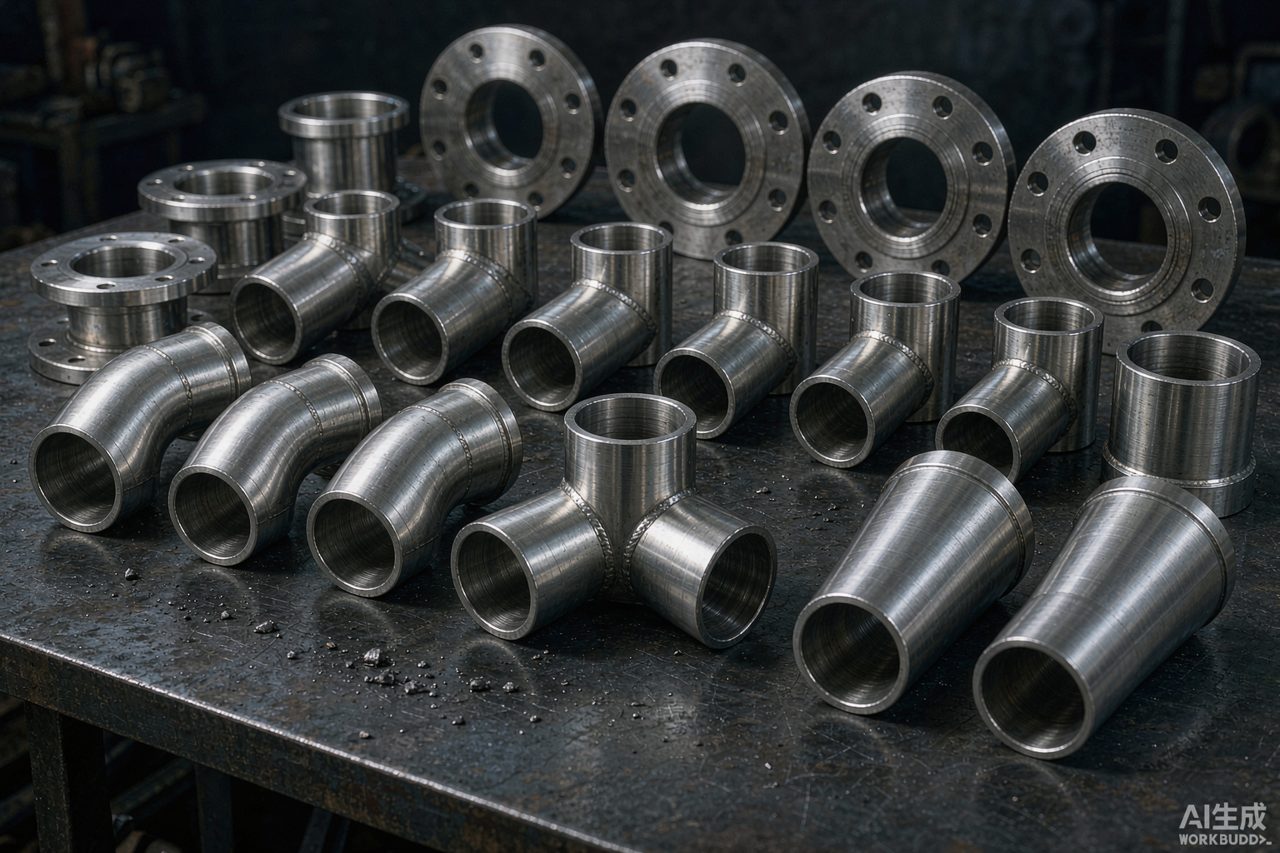
A pipeline is pipe plus a surprising amount of hardware: every direction change, branch, size transition and equipment connection is a fitting, and fittings are where most fabrication errors and leak points live. This guide walks through the common types and the decisions hiding inside each.
Elbows: direction changes
Long-radius (1.5D) elbows are the default for most services - lower pressure drop and less erosion at the bend. Short-radius elbows fit tight spaces at the cost of higher pressure loss and are increasingly restricted in slurry and two-phase service. For directional changes that must be dismantled, threaded or flanged elbows substitute for weld elbows; for pigged lines, only long-radius bends with matching bore survive.
Tees and branches
Equal and reducing tees cover standard branch connections. Where the branch is much smaller than the run, weldolets and threadolets avoid cutting a full tee into the line and are the standard for instrumentation taps and small takeoffs on large pipe. Reinforcement rules matter: an unreinforced branch on high-pressure pipe is a code violation, not a shortcut.
Reducers: size transitions
Concentric reducers keep the centerline - use them at pump discharges and in vertical lines. Eccentric reducers keep one side flat: flat-side-up on pump suctions to avoid gas pockets, flat-side-down over racks where drainage matters. Getting this wrong at a pump suction is the classic commissioning problem that no amount of pump replacement will fix.
Flange types and facings
- Weld-neck flangesare the default for pressure and cycling service; the hub transitions stress smoothly into the pipe.
- Slip-on flangescost less and forgive cut length errors, but their fillet welds are weaker in fatigue - avoid them on vibrating lines.
- Blind flangesclose line ends and nozzles; on fatiguing services they see full pressure loading and deserve respect in thickness.
- Lap joint flanges with stub endssuit alloy lines where the flange itself can stay carbon steel.
Facing matters as much as type: raised face with a spiral wound gasket is the industrial default; ring joints on RTJ flanges serve high pressure and temperature; flat face exists for brittle mating parts like cast iron valves, where a raised face flange would crack the valve by bending it through the bolting.
Gasket and bolting pairing
The gasket choice is part of the flange decision, not an afterthought. Spiral wound gaskets need sufficient bolt stress to seat properly; compressed fiber sheets tolerate lower loads but not high temperature. And torque the bolts in the standard cross pattern - gasket leaks are more often a bolting-workmanship problem than a component problem.
A final note on materials
Match fitting grade to pipe grade. A516-based forgings, A105 flanges and A234 fittings form the standard carbon steel family; mixing in unknown fittings to save a little money creates a weak link no inspection program will reliably catch. Buy fittings with traceability certificates, exactly as you would the pipe itself.