API 600, API 6D and ASME B16.34: Valve Standards Explained
Three standards appear on almost every valve datasheet, and they answer three different questions. Knowing which is which prevents expensive confusion in procurement.
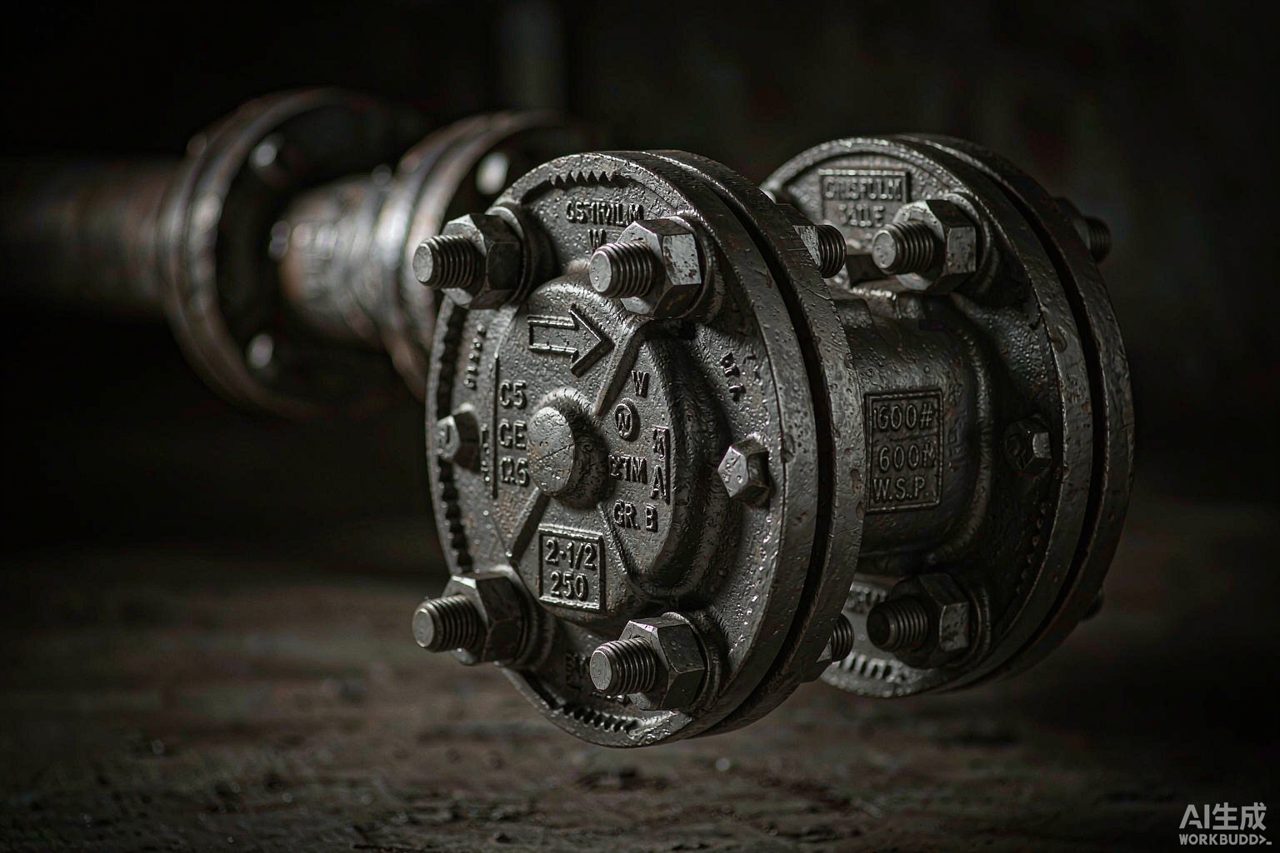
Procurement documents often list API 600, API 6D and ASME B16.34 as if they were alternatives. They are not - each standard answers a different question about the same valve, and mixing them up leads to rejected inspection documents and delivery disputes.
ASME B16.34: the pressure boundary
B16.34 defines wall thickness, flange dimensions, pressure-temperature ratings and material groups for valves in classes 150 through 4500. It answers the question: is this body strong enough for this pressure at this temperature? When a datasheet says Class 300 per B16.34, the flange bolting pattern and the allowed pressure at a given temperature are fixed by that standard.
API 600: the bolted-bonnet gate valve
API 600 covers gate valves for refinery and petrochemical service. It builds on B16.34 pressure boundaries but adds requirements that matter in hydrocarbon service: minimum wall thickness above the B16.34 floor, stem and seat face material hardness pairing, backseat requirements and extended body stock for erosion. API 600 essentially says: this is what a heavy-duty gate valve must contain beyond the generic pressure rules.
API 6D: pipeline service
API 6D applies to valves on pipelines and pipeline terminals - ball valves, check valves, gates and plugs used for transportation systems. Its focus is different from refinery standards: double block and bleed capability, cavity relief provisions, full-bore or reduced-bore definitions, weld-end preparations matching line pipe, and documented seat leakage limits. A pipeline ball valve ordered per API 600 would arrive unsuitable for pigging and without DBB verification.
How they combine on a real order
- Steam gate valve, Class 300, carbon steel: B16.34 pressure boundary + API 600 construction requirements.
- 36-inch gas trunkline ball valve: B16.34 for the pressure classes + API 6D for pipeline-specific function and testing.
- A/anti-corrosive cooling water butterfly valve: neither API document - ASME B16.34 plus the relevant soft-seat standards, or EN equivalents.
The testing trap
API 6D and API 598 describe different test pressures, durations and acceptance criteria. A valve tested per API 598 will not automatically satisfy an API 6D certificate requirement, and inspectors on pipeline projects know this. Specify the test standard on the PO, not just the design standard.
Practical advice
When a vendor quote lists standards, check three lines: pressure class with the governing body standard, the construction standard matched to the service type, and the test standard with acceptance criteria. Three matching lines mean the quote is real; missing or generic references are an early warning worth acting on.