Valves for Offshore Platform Topside Service
A practical guide to selecting and specifying valves for offshore platform topside service, covering materials, coatings, fire safety, weight optimization, and maintainability.
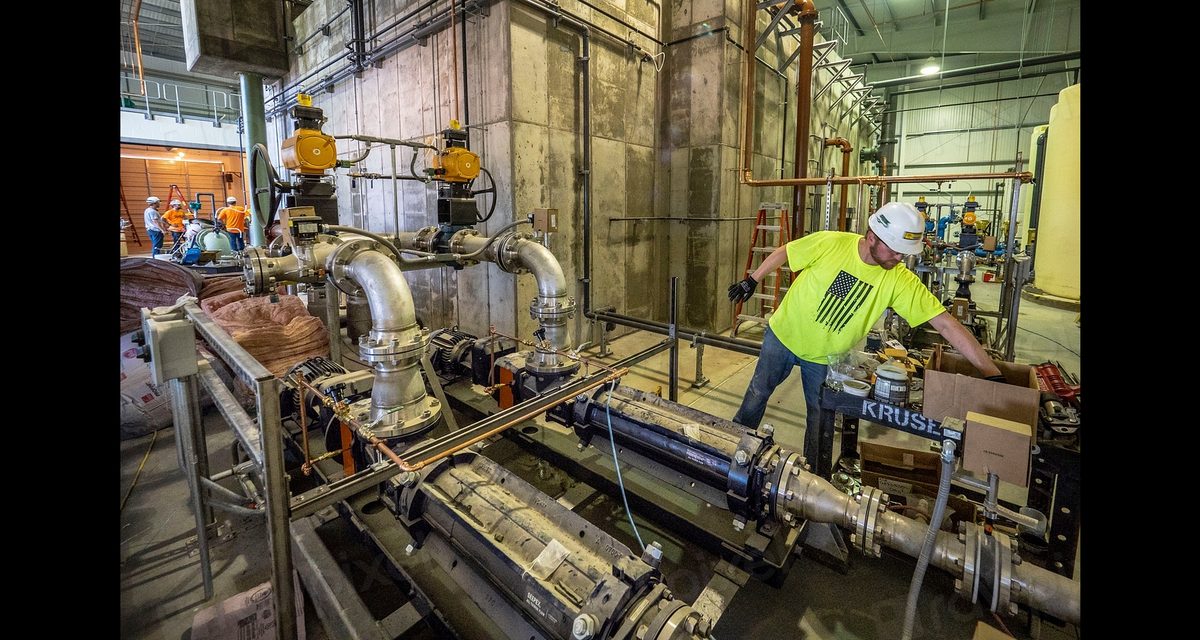
Why the Topside Environment Is Different
Ask anyone who has spent time on a production platform and they will tell you the same thing: the sea is not kind to equipment. Topside valves live in an atmosphere loaded with salt spray and chloride-bearing humidity, where a carbon steel body left bare will show rust within weeks of arrival. Add constant vibration from rotating machinery, limited deck space, and crane lifts that cost real money per kilogram, and the specification problem becomes very different from an onshore plant.
The consequences show up in the details. A valve that performs acceptably in a Gulf Coast chemical plant can fail its pre-commissioning inspection on a North Sea platform because the coating was not qualified for C5-M, or because the bolting showed crevice corrosion before first oil. Offshore specifications therefore tend to be stricter across the board: materials, testing, documentation, and even the way valves are arranged on the deck. Getting these decisions right at the specification stage is far cheaper than discovering them during shutdown.
Material Standards: NORSOK and Beyond
Where NORSOK M-650/M-630 applies, compliance is not optional. NORSOK M-630 governs piping materials, and M-650 covers the qualification of manufacturers of forged and cast products — including valve bodies, bonnets, and internals destined for Norwegian offshore service. The standard demands controlled chemistry, toughness at low temperature, and documented traceability that goes well beyond a routine EN 10204 3.1 certificate. For components supplied to NORSOK systems, an M-650 qualification record for the forging or casting source is typically required before fabrication begins.
Elsewhere in the world, other frameworks take its place, but the underlying logic is similar:
- Material chemistry and mechanical properties qualified at the source, not assumed from grade names
- Impact testing at the minimum design temperature, especially for valves in cold climate or cryogenic-adjacent service
- Full traceability from melt to final assembly, retained for the life of the platform
Common topside body materials include carbon steel (with low-temperature grades where needed), 316/316L and duplex 2205, super duplex for chloride-heavy duties, nickel aluminum bronze for seawater, and titanium where weight and corrosion resistance justify the premium.
Coating Systems for C5-M
An offshore topside sits squarely in the C5-M corrosivity class of ISO 12944 — marine environments with very high salinity. Coating selection is therefore part of the valve specification, not an afterthought. A typical qualified system is a three-coat arrangement: a zinc-rich epoxy primer, a high-build epoxy intermediate, and a polysiloxane or polyurethane topcoat, with total dry film thickness and application procedure agreed with the operator.
A few practical points matter more than others:
- Coatings must be applied over properly prepared, blast-cleaned surfaces with the salt contamination limits verified
- Areas masked during coating — seating faces, stems, bolting threads — need protection that survives transport and erection
- Exotic alloys such as super duplex, nickel aluminum bronze, and titanium are often left uncoated, which shifts the corrosion argument to the base material itself
- Small-bore fittings and instrumentation valves frequently rely on material upgrade rather than coating, because paint film tolerances interfere with function
Fire Safety and Passive Fire Protection
On a topside, hydrocarbon fire is a credible event, not a theoretical one. Valves in hydrocarbon-carrying lines are therefore specified to a fire-safe test standard — typically API 607 for quarter-turn valves and API 6FA or ISO 10497 for other types — demonstrating that after a burn-and-cool cycle, leakage stays within defined limits and the valve remains operable.
Passive fire protection adds another layer. Valves and actuators may sit inside a fireproofing envelope, which affects actuator sizing, handwheel access, and even the choice of soft or metal seating. A common failure mode discovered after installation: a soft-seated valve is fine in normal service, but during a fire event the elastomer seats are gone and the metal backup is what actually contains the process. That is exactly what fire-safe design is meant to guarantee, and why the certificate is only as good as the test witness and the trunnion, gland, and seat backup design behind it.
Valve Configuration Across Platform Systems
Each topside system imposes its own demands, and a quick review of a full industrial valve range shows how mixed the duties are. On wellhead and Christmas tree duties, the isolation and choke valves see abrasive, high-pressure flow, and are frequently specified with heavy trunnion-mounted ball valves featuring metal seats and double block-and-bleed capability. In the production train, separators, coolers, and pumps call for a mixture of gate and globe valves for isolation and regulation, with control valves qualified per IEC 60534 for severe service.
Utilities are where the variety is greatest:
- Seawater lift and cooling lines: butterfly and check valves in nickel aluminum bronze or super duplex, sized to resist velocities that keep marine growth down
- Instrument and utility air: stainless steel ball valves with redundant soft seals, compact and lightweight
- Diesel and MEG storage and transfer: gate or ball valves with fire-safe certification and low-emission packing per API 622/624
- Closed and open drains: larger bore, lower pressure, corrosion allowance dominant
Double block-and-bleed arrangements are routine wherever an operator may break containment. Compact DBB designs — twin-ball or twin-gate in a single body — save both space and weight, which brings us to the next subject.
Weight Optimization: Alloys That Earn Their Keep
Deck loading limits and crane capacity make topside weight a first-order design variable, not a footnote. This is where the higher-cost alloys pay for themselves. Titanium offers roughly half the weight of 6Mo or super duplex for seawater service with essentially unlimited chloride resistance. Duplex 2205 gives about twice the yield strength of 316L, allowing thinner wall sections under the same design pressure. Nickel aluminum bronze, while denser than steel, resists seawater corrosion and erosion so well that it eliminates the coating system and its life-cycle maintenance.
The weight argument compounds across the design:
- Smaller, lighter valve bodies permit lighter supporting steelwork
- Compact flanged or wafer connections shorten face-to-face dimensions and reduce piping weight
- Fewer spools and smaller envelopes make modules easier to transport and install
Maintenance Access and Reachability
A valve on an offshore platform will almost certainly be operated or maintained by someone standing in a constrained space, possibly with a tight-fitting suit and limited visibility. Good specification therefore asks: can a technician reach the handwheel with the access platforms actually installed? Can the actuator be removed without lifting the valve body? Is the stem seal replaceable in situ, or is back-welding required?
Design decisions that help:
- Preference for bolted-bonnet designs where in-service packing replacement is planned
- Extension stems or gear operators to place handwheels at reachable height
- Actuators with local override that do not require removal for manual operation
- Consistent handwheel and actuator orientations across a module so training and procedures transfer
Certification and Third-Party Inspection
Offshore procurement rarely takes certificates on faith. Class societies such as DNV, ABS, and Lloyd's Register survey material manufacture, witness pressure testing, and stamp or stamp-verify the documentation. Valve packages typically call for EN 10204 3.2 certification, hydrostatic testing per API 598 or ISO 5208 leakage acceptance, seat leakage classes confirmed by test, and, for fire-safe claims, witnessed burn tests at accredited laboratories. Paint qualification, NACE MR0175 compliance for sour service, and packing/seat performance per API 622/624 round out the list.
The paperwork is not decorative — it is what allows a valve installed today to remain traceable through decades of offshore life. An experienced industrial valve maker that produces the full range in-house — ball valves, control valves, gate valves, globe valves, check valves, strainers, knife gate valves, plug valves, and butterfly valves — can supply topside packages with the certifications, coatings, and material qualification that offshore operators expect. If you are preparing a topside valve package, send your valve schedule or key process parameters to the manufacturer's applications team for an engineered specification to match.